Why Do Technology Investments Fail to Deliver the Expected Outcomes?
Technology investments fail to deliver the expected outcomes when people do not understand, adopt, and apply them effectively.
The issue is rarely the technology alone. Systems, tools, policies, and controls only create value when people know why they matter, how to use them, and how their behavior needs to change.
Education and communication are not supporting activities. They are core enablers of technology outcomes.
Why organizations struggle
Many organizations respond to poor technology outcomes by investing in more tools, more controls, or more systems.
But the real gap is often elsewhere.
People may not understand:
- What is changing
- Why it matters
- How it affects their role
- What they are expected to do differently
- How success will be measured.
This is why technology can be implemented successfully but still fail to create business value.
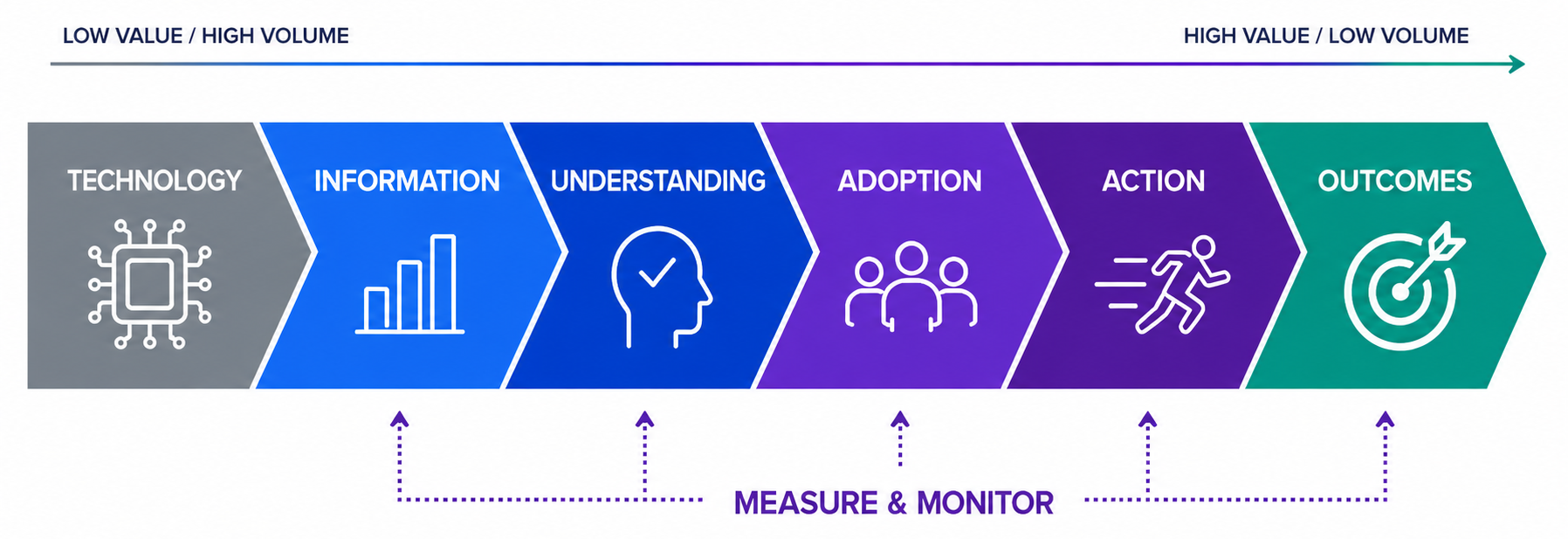
Technology creates capability. People turn capability into outcomes.
The overlooked role of education and communication
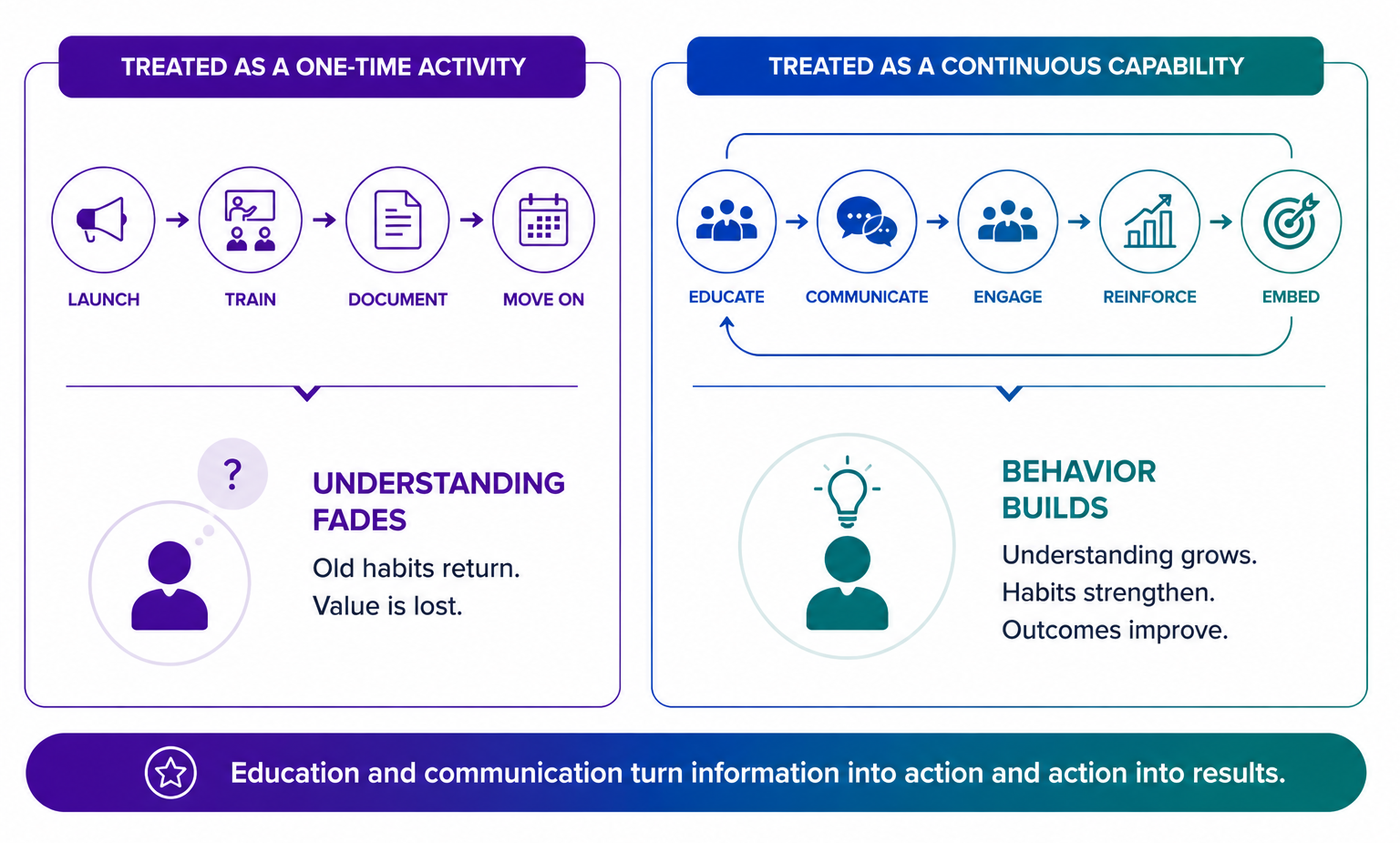
Education and communication are often treated as one-time activities.
- A launch email.
- A training session.
- A policy document.
- A project update.
That is not enough.
Understanding fades. Old habits return. Users default to familiar workarounds when under pressure.
Technology value requires continuous reinforcement, not one-time communication.
Where this shows up
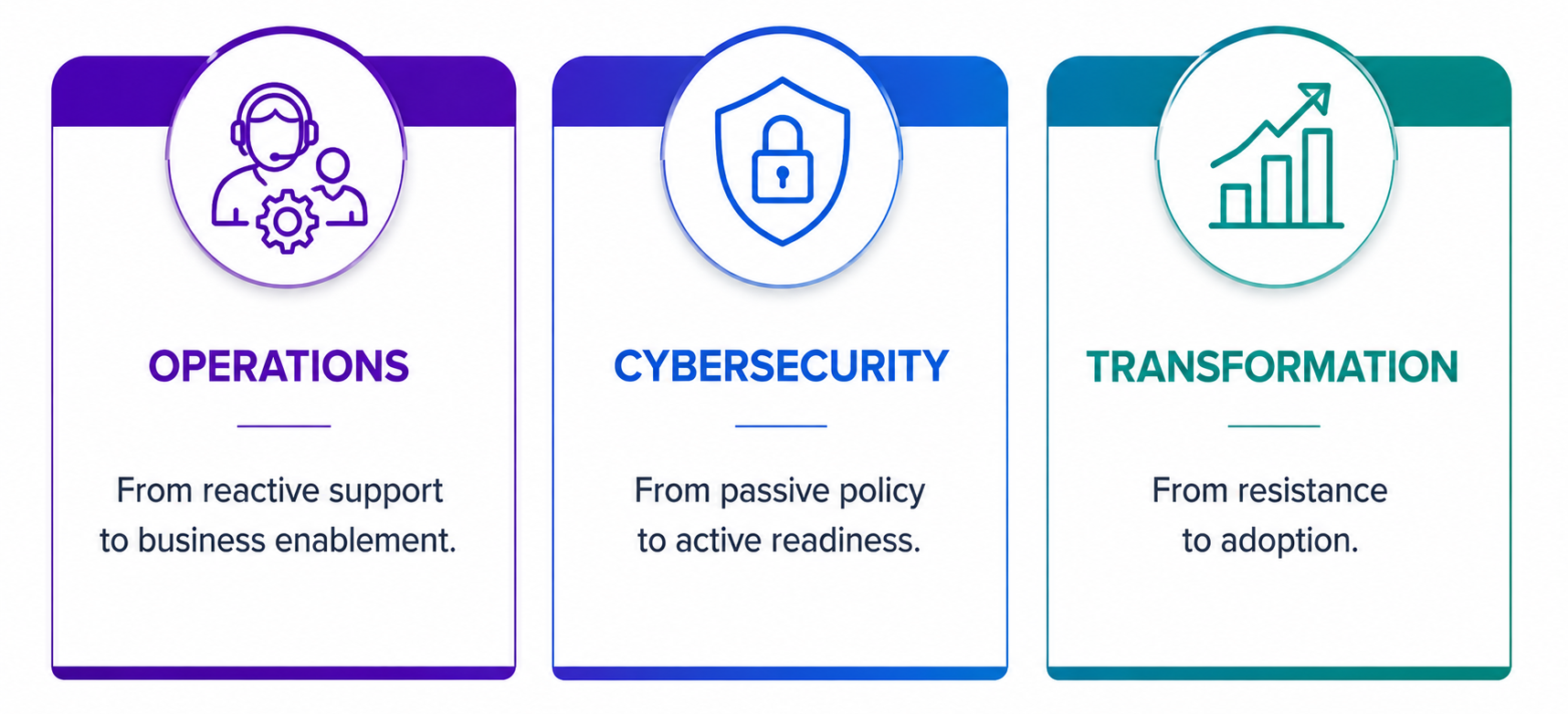
This pattern appears across several areas. Three common ones are:
Technology operations
Service teams often become reactive and process-driven. When communication improves, IT shifts from being seen as a blocker to being trusted as an enabler.
Cybersecurity
Policies, controls, and tools matter, but human behavior is still a critical risk. Security becomes stronger when people are continuously educated, reminded, and prepared.
Business transformation
Change succeeds when people understand the future state, see their role within it, and believe they can succeed.
Why continuous matters
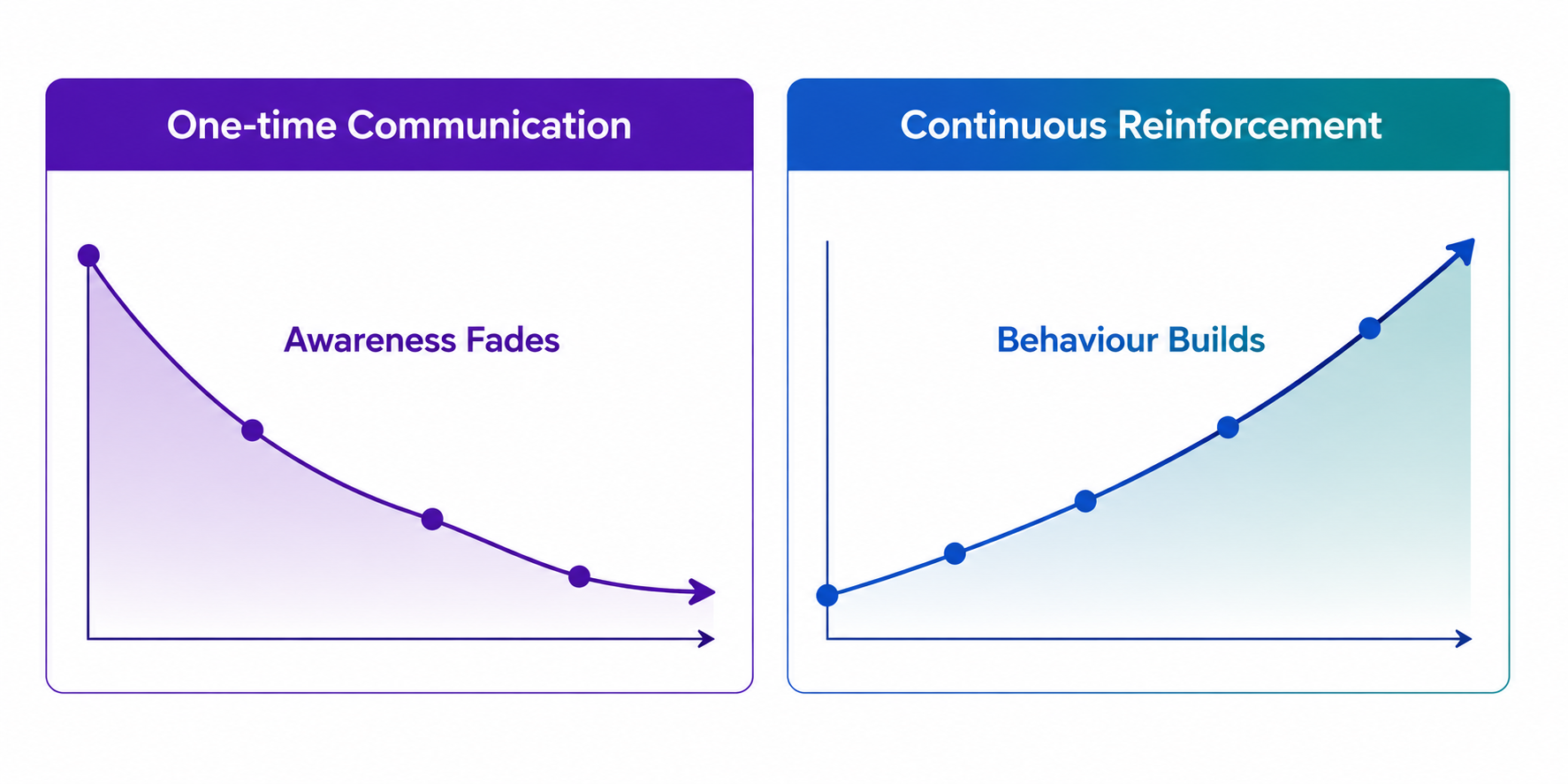
One-time communication creates awareness.
It does not create behavior.
People absorb information in small increments, build confidence through repetition, and form habits through reinforcement.
Without continuous communication:
- Knowledge fades.
- Shortcuts return.
- Old behaviors reappear.
- Value declines.
This applies to human behavior and system behavior. It matters just as much when people are making decisions as it does when automated systems or AI agents are taking action.
A practical approach
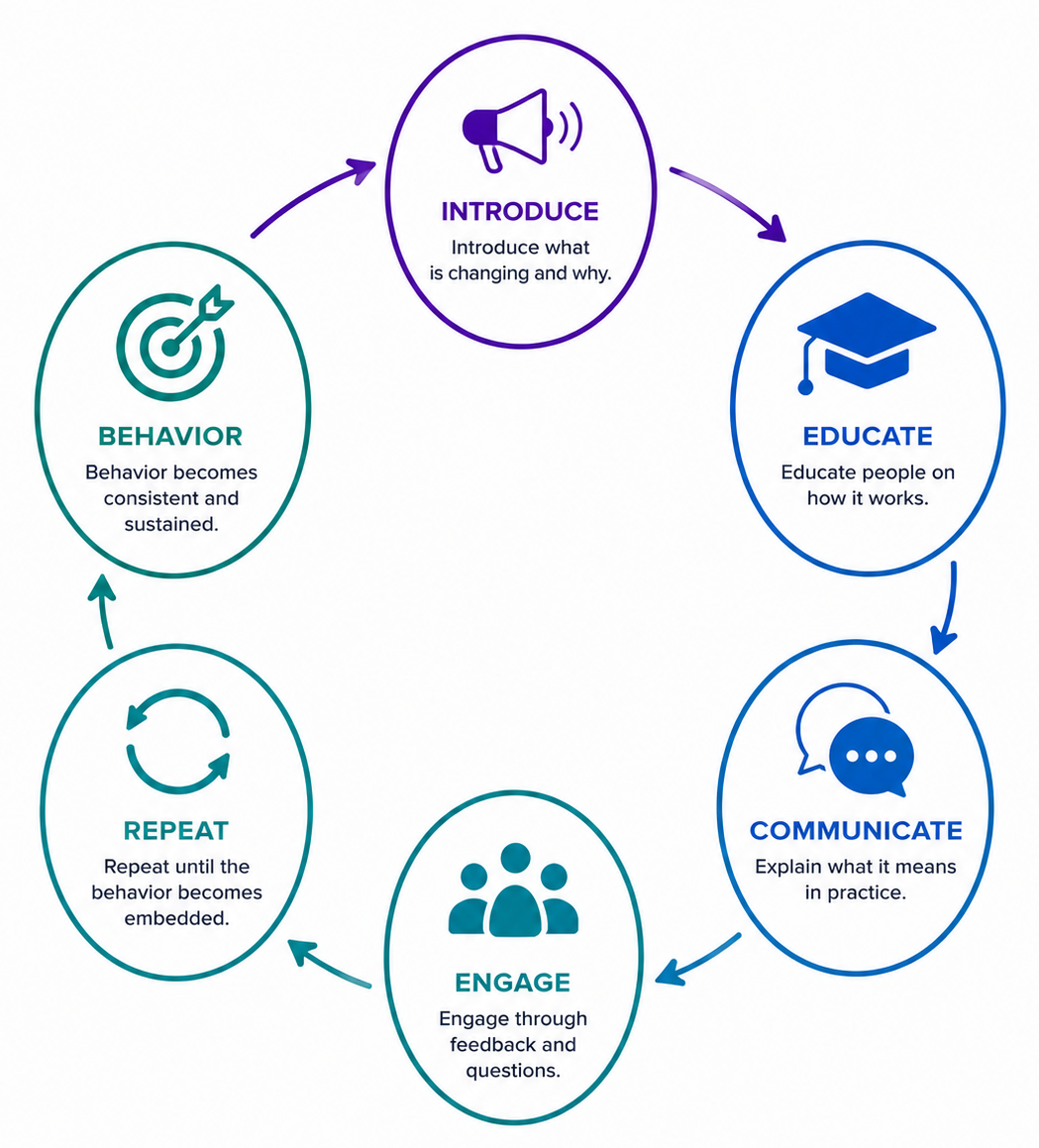
For any technology, policy, or change, organizations should:
- Introduce what is changing and why.
- Educate people on how it works.
- Explain what it means in practice.
- Communicate clearly and repeatedly.
- Engage through feedback and questions.
- Repeat until the behavior becomes embedded.
The goal is not communication for its own sake.
The goal is consistent action and sustained behavior.
The role of AI
AI now makes it possible to deliver more targeted, timely, and scalable education and communication.
It can support users at the point of need, reinforce messages in context, and help organizations communicate more consistently.
But AI does not remove the human element.
It strengthens it.
Technology delivers value when it helps people understand, adopt, and apply change more effectively.
Practical takeaway
To turn technology into outcomes, organizations need to treat education and communication as operating capabilities.
Not as launch activities.
Not as documentation.
Not as afterthoughts.
As continuous mechanisms for turning capability into behavior.
The goal is not more technology.
The goal is better understanding, better adoption, and better outcomes.
Go deeper...
This article is based on the full paper:
From Technology to Outcomes: Why Education and Communication Drive Technology Success
Download the full paper